
Faith Behind the Iron Curtain: Religion in Communist Poland and the Role of the Catholic Church in the Fall of Communism
Imagine Warsaw in the 1980s. The streets are filled with grey apartment blocks, queues stretch outside shops, and the communist government controls the newspapers, television, and most aspects of public life. Yet every Sunday, thousands of people gather in churches. Inside, they find something increasingly difficult to find elsewhere: a sense of community, freedom of expression, and hope.
Religion played a remarkable role in the history of the Polish People's Republic (Polska Rzeczpospolita Ludowa, or PRL), which existed until 1989. Although the communist authorities promoted atheism and attempted to reduce the influence of religious institutions, the Catholic Church remained one of the strongest independent organizations in the country.
Its influence went far beyond religious services. Churches became meeting places, centers of charity, shelters for opposition activists and, eventually, important spaces in the peaceful struggle that contributed to the end of communism.
To understand why this happened, it is worth looking at the relationship between religion and communism in Poland, how ordinary people experienced it, and how the situation compared with other countries behind the Iron Curtain.
Communism and religion: an uneasy relationship
After the Second World War, Poland found itself within the Soviet sphere of influence. The new communist authorities followed an ideology based on Marxism-Leninism, which viewed religion as an obstacle to building a socialist society.
The communist state promoted a secular, officially atheist worldview. Religious organizations were treated with suspicion because they represented institutions independent of the Communist Party and maintained connections beyond the country's borders.
The Catholic Church was a particular concern. For centuries, Catholicism had been closely connected with Polish history and national identity. During the partitions of Poland (1795-1918), the Church helped preserve Polish traditions and a sense of national belonging. During the Second World War, it also suffered enormously under Nazi occupation.
With all this history, being Catholic was not just a matter of personal belief for many Poles, but was connected with cultural identity and the survival of the nation. The communist authorities understood this connection and attempted to weaken it.
In the late 1940s and early 1950s, the Church faced arrests of priests, confiscation of property, restrictions on religious education, and increasing state interference. Religious publications were censored, while the construction of new churches was often obstructed by bureaucratic decisions.
One of the most significant confrontations took place in 1953, when Cardinal Stefan Wyszyński, the Primate of Poland, was arrested and imprisoned. He remained under house arrest until 1956.
However, the authorities never managed to eliminate the Catholic Church. Following political changes in 1956, a more complicated arrangement emerged. The Church retained a degree of independence, although it continued to face surveillance and political pressure.
This made communist Poland different from many other communist countries.
Poland compared with other communist countries
Although communist governments throughout Eastern Europe generally promoted atheism and restricted religious institutions, the situation was far from identical everywhere.
Poland was unusual because the Catholic Church had such deep roots in society and had widespread public support. The country's strong religious traditions made it difficult for the authorities to implement the same policies that had been used elsewhere.
In the Soviet Union, religious institutions faced particularly severe repression, especially during the Stalinist period. Churches were closed, religious leaders were imprisoned or executed, and religious activity was closely monitored. Although some churches continued operating, their freedom was heavily restricted.
In Czechoslovakia, the communist government also pursued an aggressive campaign against religious institutions. Monasteries were dissolved, clergy were persecuted, and the state attempted to bring the Church under its control. Religious practice survived, but the Church had much less public influence than in Poland.
Hungary experienced a somewhat different relationship between the state and the Catholic Church. Cardinal József Mindszenty became a symbol of resistance to communist interference and was arrested in 1948. Following the 1956 Hungarian Revolution, the regime gradually developed a more pragmatic approach, allowing certain religious activities while maintaining considerable control over Church institutions.
East Germany offers another interesting comparison. Protestant churches remained important spaces for independent discussion and eventually played a role in the peaceful revolution of 1989. However, decades of communist rule contributed to a substantial decline in religious affiliation, particularly among younger generations.
At the extreme end of the spectrum was Albania, where the communist regime declared the country an atheist state in 1967 and prohibited public manifestations of religious faith.
Poland's experience was therefore distinctive. Religion remained a mass phenomenon, the Church maintained a relatively independent organizational structure, and priests could speak to large audiences without the authorities being able to silence them completely.
This did not mean that Poland was a country without religious repression. Rather, the strength of the Church and its relationship with society made the Polish situation particularly difficult for the communist government to control.
Everyday life: how ordinary Poles practised their faith
For ordinary Polish families, religion was often woven into everyday life, even when the official ideology of the state discouraged it.
Children were baptized, families celebrated Christmas and Easter, and many people attended Sunday Mass. First Holy Communion, church weddings, and religious funerals remained important family occasions.
For some people, attending church was primarily an expression of genuine religious belief. For others, it was also a way of maintaining family traditions and cultural identity.
There were, of course, many Poles who were indifferent to religion or openly non-religious. Not everyone supported the Church, and not everyone who attended Mass was politically opposed to the government.
Nevertheless, churches offered something particularly valuable in a society where independent public organisations were difficult to establish. They provided a space where people could meet, exchange opinions, and discuss subjects that were rarely addressed openly in state-controlled media. Churches also organized charitable activities, helped families in difficult circumstances, and supported people affected by political repression.
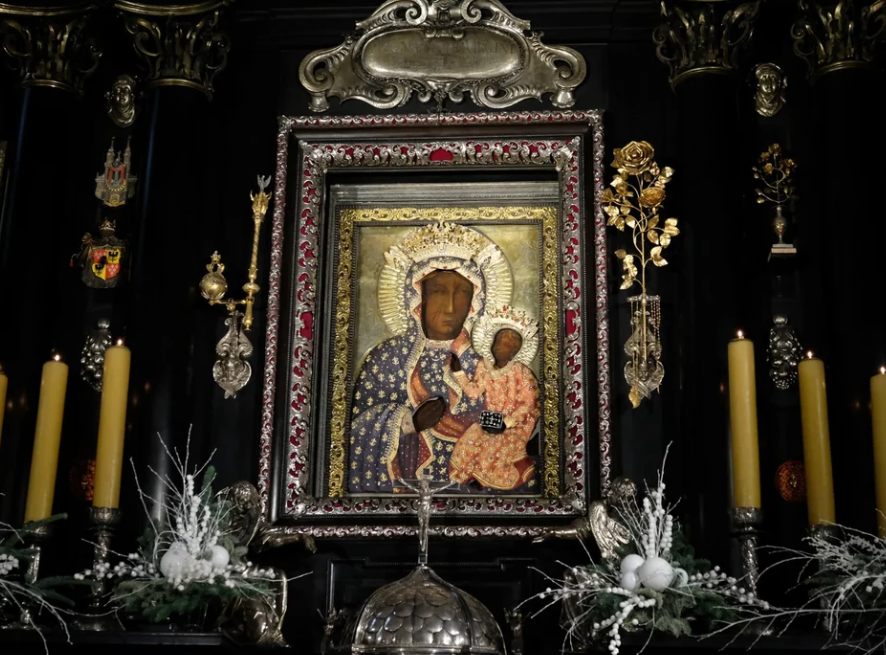
Religious celebrations could become important public gatherings. Pilgrimages to the Jasna Góra Monastery in Częstochowa, home of the famous Black Madonna, attracted enormous numbers of people. These events demonstrated that Polish society had a strong collective identity that existed independently of the communist state.
For many visitors exploring Warsaw today, it is worth remembering that a church in communist Poland was not necessarily just a place of worship. It could also be a centre of traditional cultural activity and informal opposition.
Priests: between faith, resistance and repression
The role of priests during the communist period was complicated. Many priests openly criticized the government's policies and supported people who experienced political persecution. Some became important figures in the opposition movement.
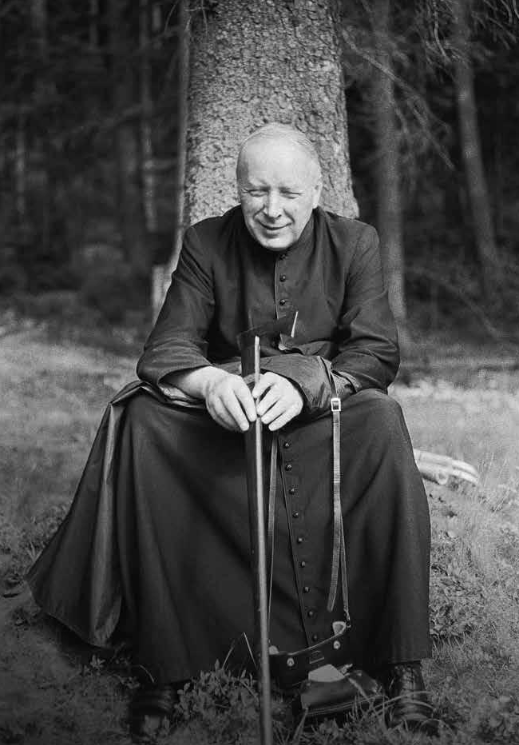
One of the most influential was Cardinal Stefan Wyszyński, who served as Primate of Poland from 1948 until his death in 1981. Despite his imprisonment, he became a symbol of the Church's independence and its determination to protect religious freedom.
Another important figure was Father Jerzy Popiełuszko, a priest associated with Warsaw's St Stanislaus Kostka Church in the Żoliborz district. During the 1980s, Father Popiełuszko celebrated monthly Masses for the Homeland (Msze za Ojczyznę). These services attracted large crowds and combined religious messages with reflections on human dignity and freedom. He openly supported the Solidarity movement and provided spiritual support to workers and opposition activists.
The communist security services considered him a dangerous threat. In October 1984, he was kidnapped and murdered by officers of the Security Service. His death shocked Polish society and became one of the most notorious crimes of the communist era. Today, his tomb at St Stanislaus Kostka Church remains an important place of remembrance.
It is important to remember, however, that not every priest was an opposition activist. Some tried to avoid political involvement, while others maintained working relationships with the authorities. The secret police also attempted to recruit members of the clergy as informants, sometimes through blackmail or intimidation.
The Church itself was not politically uniform. Its leaders often sought to defend religious freedoms while avoiding violent confrontation, while some individual priests were more outspoken in their opposition. This diversity of attitudes makes the history of religion under communism more complex than a simple story of priests fighting against the state.
John Paul II: the Polish pope who inspired a nation
No discussion of religion in communist Poland would be complete without mentioning one of the most influential figures of the twentieth century: Pope John Paul II.
Born Karol Wojtyła in Wadowice in 1920, he became Archbishop of Kraków and later a cardinal. On 16 October 1978, he was elected Pope, becoming the first non-Italian pontiff in more than 450 years.
For the Polish communist authorities, this was an unexpected development. A Polish citizen had become the head of the Catholic Church, an institution with enormous international influence. For millions of Poles, it was a moment of immense pride and hope.
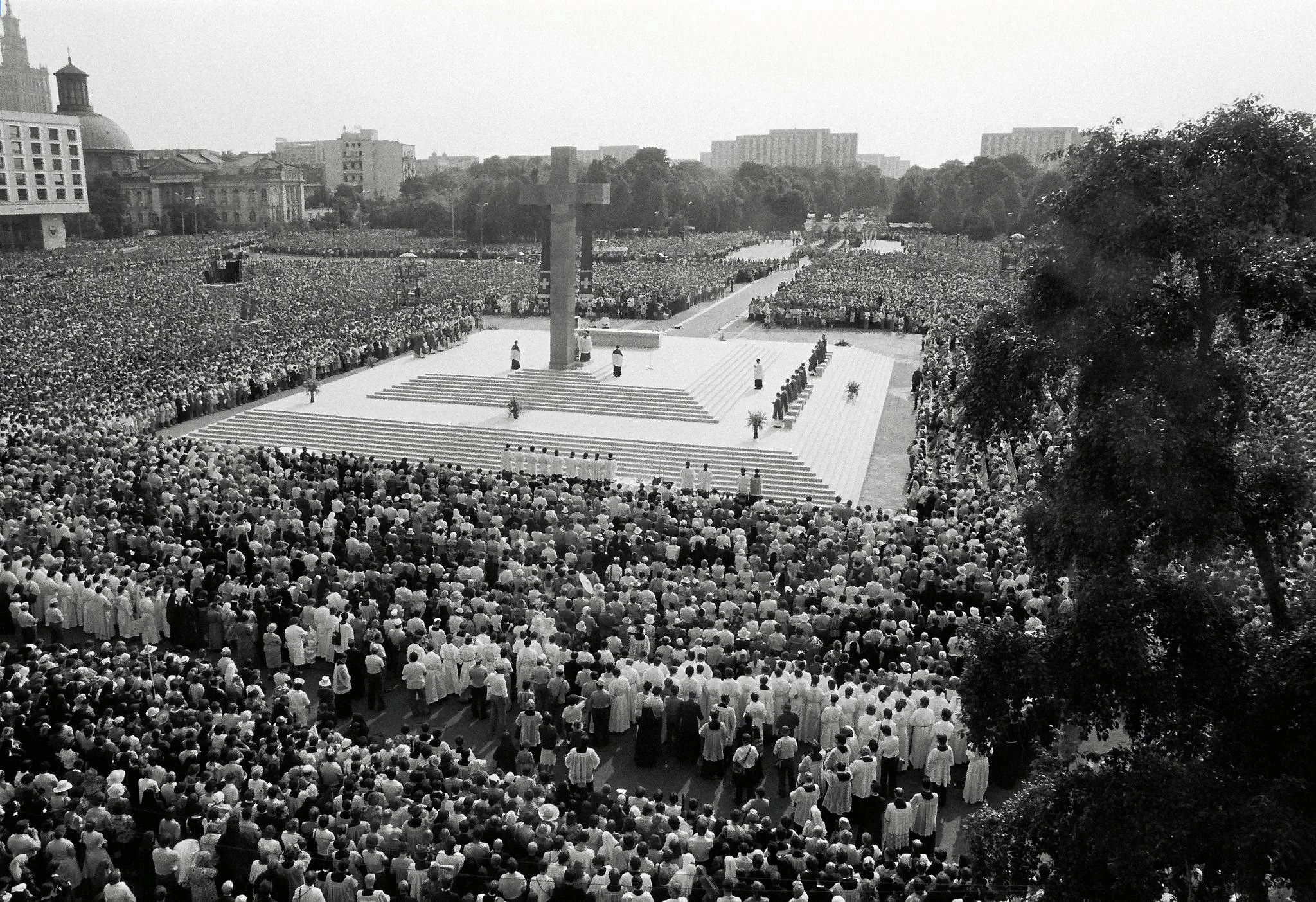
The most significant event came in June 1979, when John Paul II made his first pilgrimage to communist Poland. His visit to Warsaw was particularly important. On 2 June 1979, he celebrated Mass at Victory Square, now known as Piłsudski Square. During his homily, he spoke about the history, identity and spiritual strength of the Polish nation. One of the most famous passages included his appeal: "Let your Spirit descend and renew the face of the earth. This earth!"
The words were a prayer, but they also carried a powerful message in a country where the communist government claimed to represent the future of society.
Millions of people attended events during his pilgrimage. The sight of such enormous crowds revealed the scale of religious commitment and the strength of Polish society outside the structures of the Communist Party. For a few days, the authorities could see that they didn’t have complete control over the country's public life.
Historians often describe the 1979 pilgrimage as an important turning point. It helped strengthen the sense of solidarity among Poles and demonstrated that collective action was possible.
From the Pope's visit to Solidarity
Just over a year after John Paul II's first pilgrimage, Poland experienced a wave of strikes.
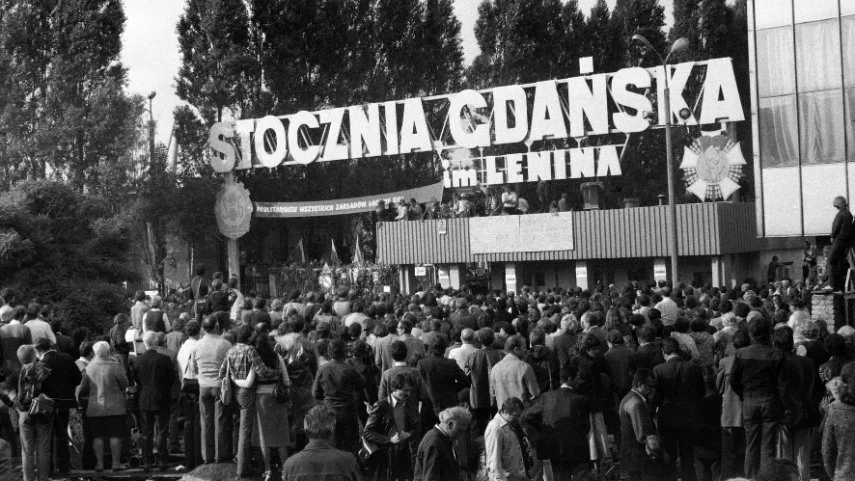
In August 1980, workers at the Lenin Shipyard in Gdańsk began a protest that developed into a nationwide movement. Led by Lech Wałęsa, the movement became known as Solidarity (Solidarność). It was the first independent trade union in the Soviet bloc, and it quickly developed into a mass social movement with millions of members.
Religion and the Church were important parts of its identity. Crosses, portraits of John Paul II, and images of the Black Madonna became familiar symbols at factories and demonstrations. The Church provided moral support, helped organize assistance for workers and their families, and offered spaces for independent discussion.
John Paul II himself continued to support the Polish people through his speeches and diplomatic influence. His message emphasised human dignity, freedom, and the right of workers to organize themselves.
When martial law was introduced in December 1981, the communist authorities attempted to crush Solidarity. Its leaders were arrested, independent activities were banned, and the country entered a period of severe repression. Once again, churches became important places of support. Priests celebrated Masses for the Homeland, helped political prisoners and their families, and provided opportunities for people to gather.
John Paul II visited Poland again in 1983 and 1987. Both visits took place during periods of political tension, and both helped sustain the hopes of people who wanted change. His influence should not be understood as the sole reason communism eventually collapsed. Economic problems, workers' protests, the activities of Solidarity, the work of intellectual dissidents, and changes in Soviet policy under Mikhail Gorbachev all contributed to the process. Nevertheless, John Paul II played a significant role. He gave international visibility to the Polish struggle and strengthened the morale of the opposition.
In 1989, negotiations between the communist authorities and the opposition took place at the Round Table. The resulting agreement paved the way for partially free elections in June 1989, in which Solidarity achieved a historic victory. The communist system in Poland subsequently came to an end, and the country began its transition towards democracy.
Religion in Warsaw today: discovering the history on foot
Walking through the remnants of communist Warsaw today, it is possible to discover many places connected with the relationship between religion and communism.
One of the most important is St Stanislaus Kostka Church in Żoliborz, where Father Jerzy Popiełuszko served as a priest. Visitors can see his tomb and learn about the role he played in supporting the opposition during the 1980s.
Another significant location is Piłsudski Square, formerly Victory Square. It was here that John Paul II celebrated his famous Mass in June 1979. The event remains one of the defining moments in modern Polish history.
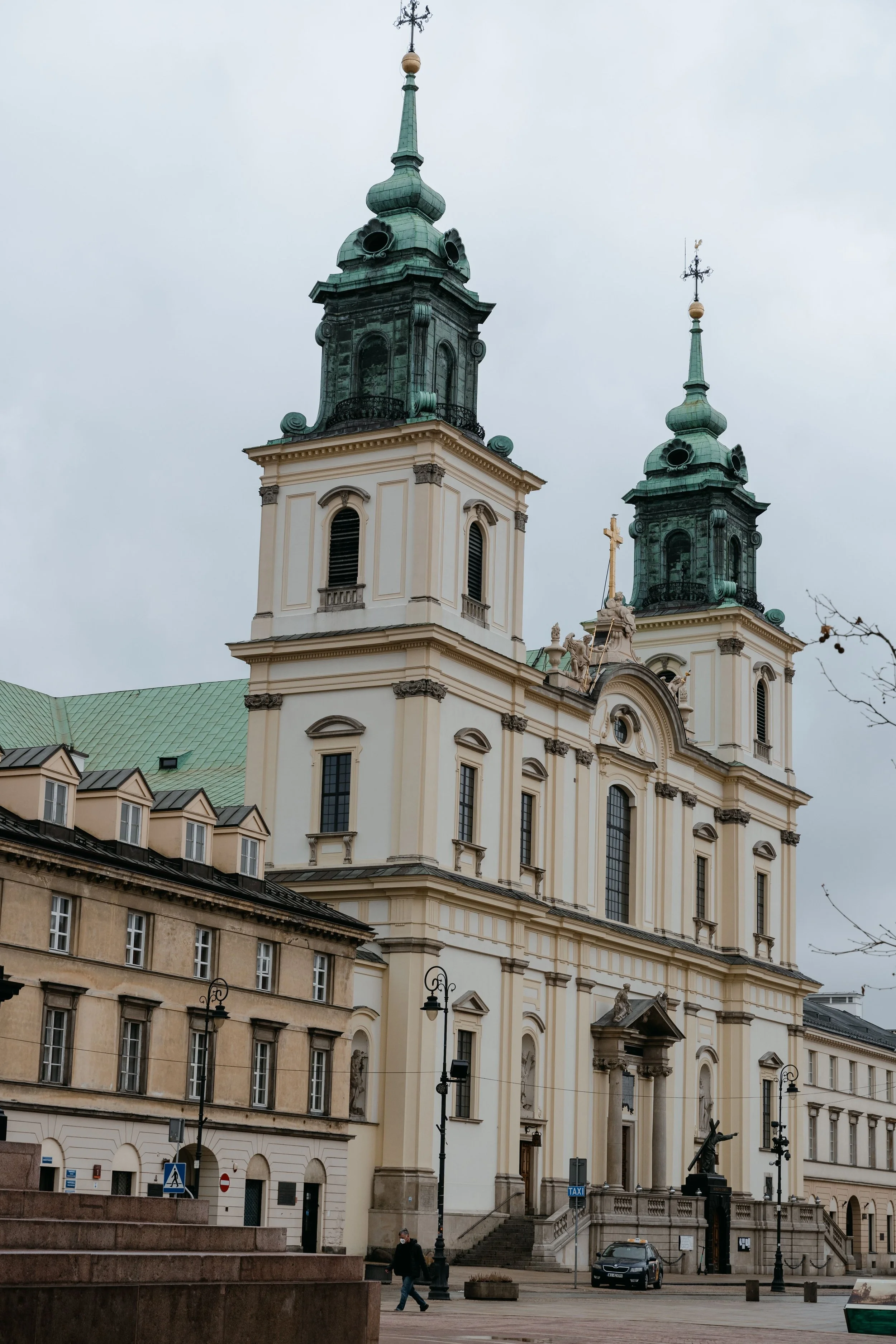
The Holy Cross Church on Krakowskie Przedmieście is another important landmark. It has a long history connected with Polish national identity and was also a place where religious and patriotic traditions remained visible throughout the communist period.
These places offer more than beautiful architecture or religious history. They help explain how ordinary people found ways to maintain their identity and community in a country where the government attempted to control public life.
The legacy of faith behind the Iron Curtain
The history of religion in communist Poland is a story of much more than the conflict between an atheist government and a religious institution. It’s a story about ordinary families who continued their traditions, priests who defended their communities, people who searched for independent spaces in an increasingly controlled society, and a Church that became an important part of the country's social and political life.
Poland's experience was different from that of many other communist countries because Catholicism remained deeply connected with national identity and because the Church retained a significant degree of independence.
John Paul II helped transform that strength into an international symbol of hope. His visits encouraged millions of people to believe that political change was possible, while the Church provided practical and moral support to those seeking it.
When walking through Warsaw, it is easy to admire its reconstructed streets, historic churches and monuments without knowing the stories hidden behind them. But understanding the role of religion during the Polish People's Republic adds another dimension to the city.
It reminds us that, even behind the Iron Curtain, there were places where people could gather, speak freely, preserve their traditions, and imagine a different future. Sometimes, those places were simply churches.